吉林大学学报(工学版) ›› 2025, Vol. 55 ›› Issue (7): 2354-2364.doi: 10.13229/j.cnki.jdxbgxb.20230871
• 交通运输工程·土木工程 • 上一篇
集束群钉装配式钢-混组合梁桥自振特性与车桥耦合分析
范亮1,2( ),曾文1,文强1,赵富裕3,徐英铭4
- 1.重庆交通大学 土木工程学院,重庆 400074
2.重庆交通大学 山区桥梁及隧道工程国家重点实验室,重庆 400074
3.中国建筑第八工程局有限公司西南分公司,成都 610041
4.重庆市开州区交通局,重庆 405400
Vibration characteristics of prefabricated steel-concrete composite beam bridges with clustered grouping bolt connection and analysis of vehicle-bridge coupling
Liang FAN1,2(),Wen ZENG1,Qiang WEN1,Fu-yu ZHAO3,Ying-ming XU4
- 1.School of Civil Engineering,Chongqing Jiaotong University,Chongqing 400074,China
2.State Key Laboratory of Mountain Bridge and Tunnel Engineering,Chongqing Jiaotong University,Chongqing 400074,China
3.Southwest Branch,China Construction Eighth Engineering Bureau Co. ,Ltd. ,Chengdu 610041,China
4.Chongqing Kaizhou District Transportation Bureau,Chongqing 405400,China
摘要:
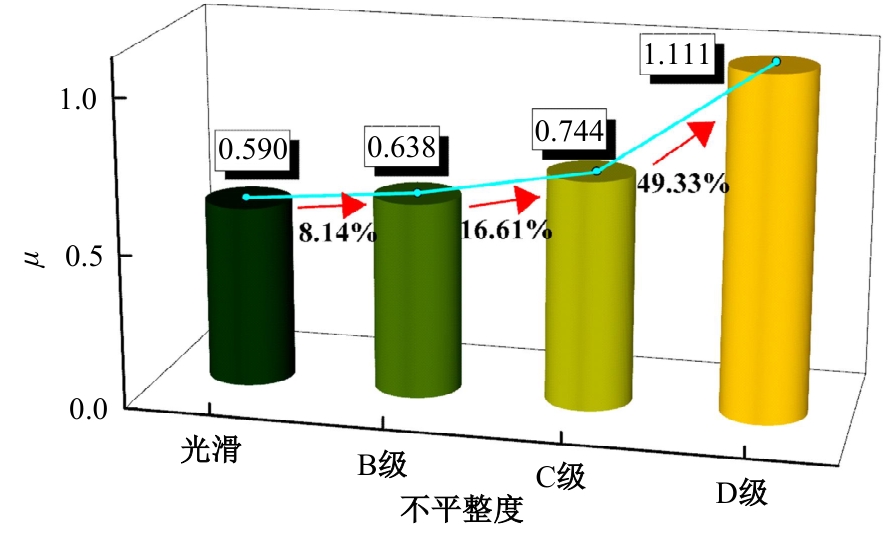
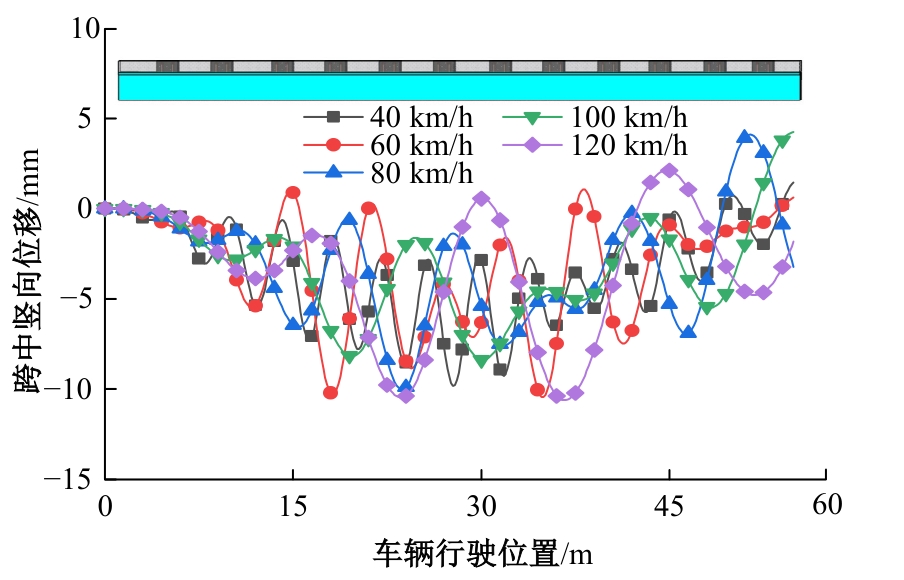
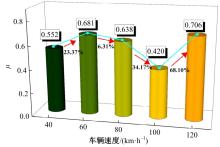
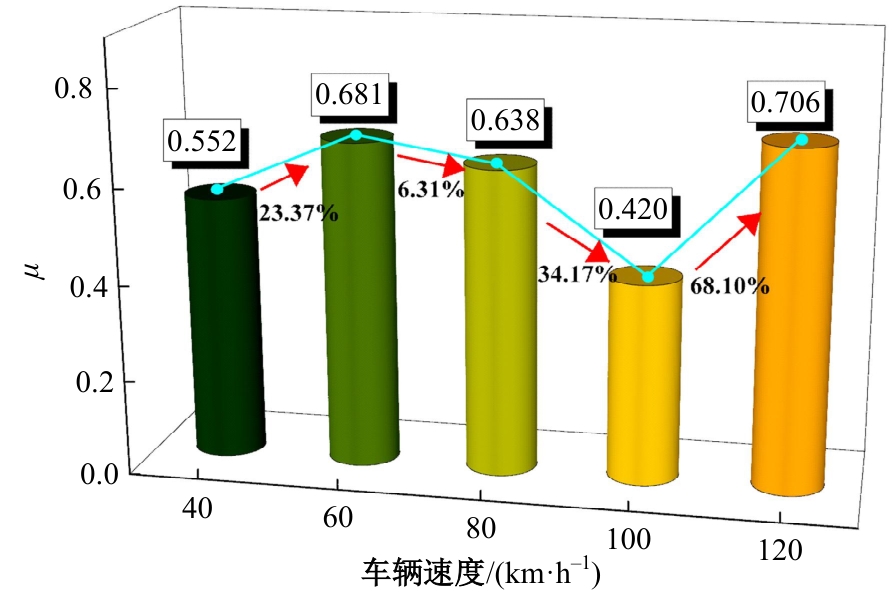
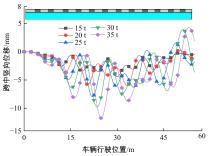
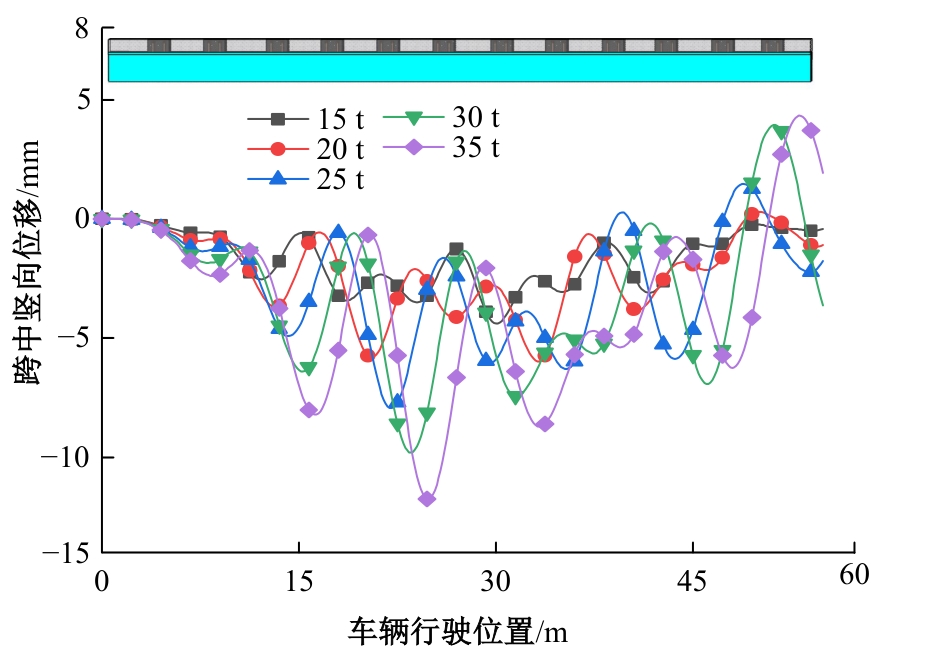
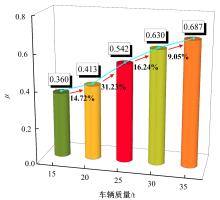
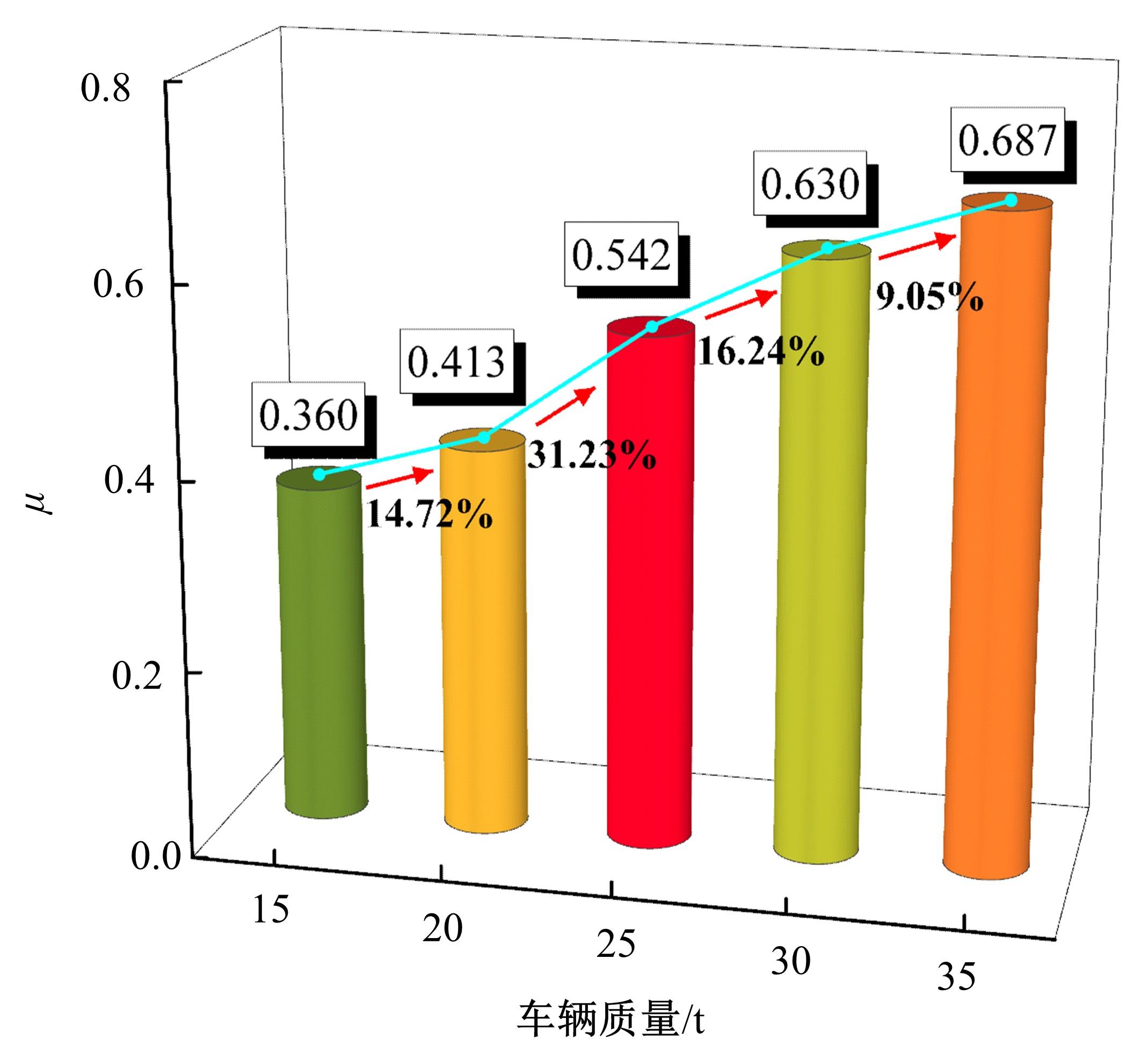
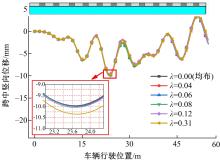
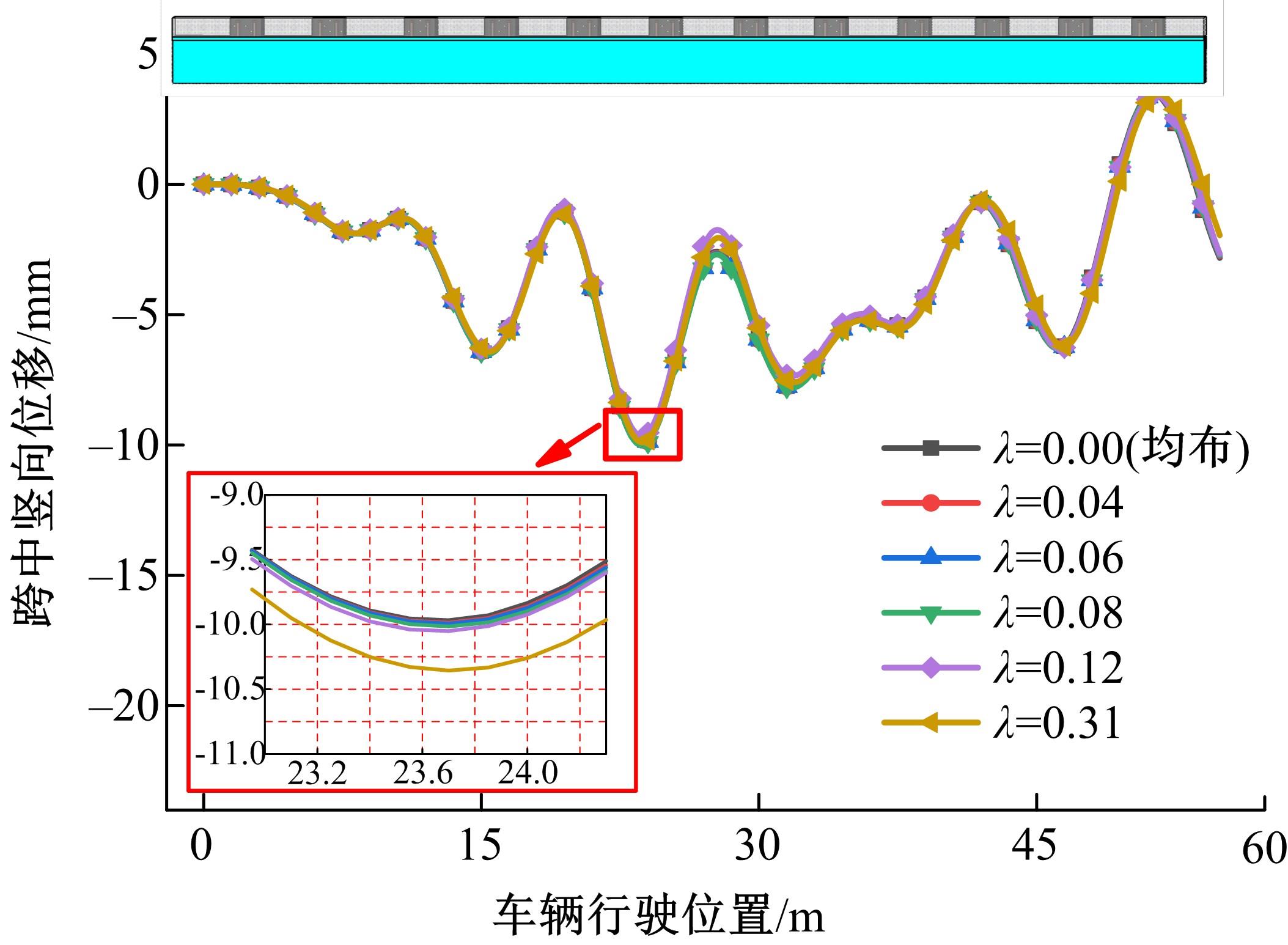
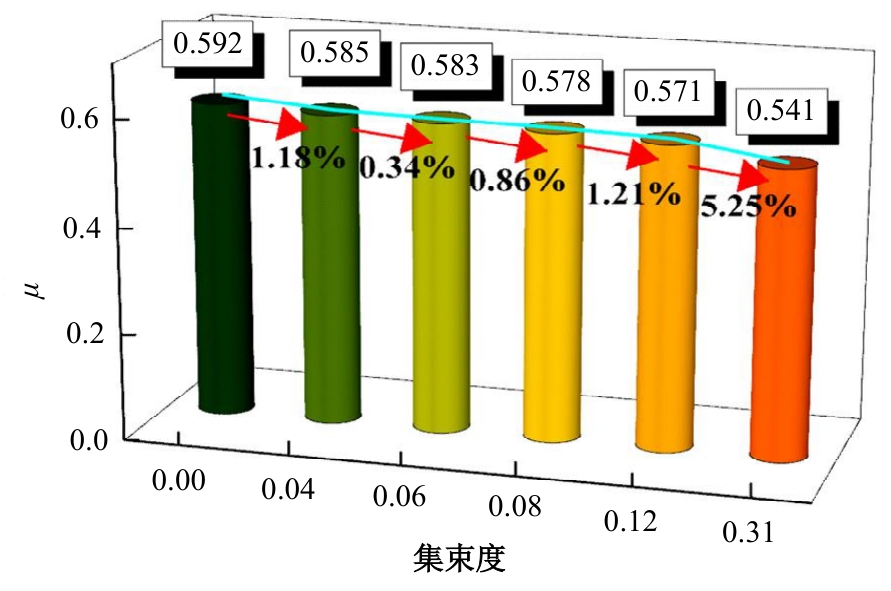
为研究考虑集束群钉非连续剪力连接影响的装配式钢-混组合梁桥动力特性,基于欧拉梁理论和Rayleigh-Ritz法,推导了该类组合梁桥自振特性理论公式,构建了多点不连续剪力约束的装配式组合梁桥车桥耦合模型,分析了路面不平整度、车速、车体质量和集束度对组合梁桥车载动力响应及冲击效应影响特征。结果表明:集束度越大,无剪力连接区越长,桥梁刚度和固有频率越低;路面不平整度提高,冲击系数增大;车速对动力响应影响呈非线性,当车速由100 km/h提高至120 km/h时,冲击系数突增68.10%,车速对动力性能影响显著;车辆质量越大,冲击系数越大,动力响应越强;集束度由0增至0.31时,最大动位移增长较静位移增长略高,冲击系数降低5.25%,集束度对冲击系数影响不显著。
中图分类号:
- TU318.1




| [1] | 韩万水, 陈艾荣. 侧风与桥梁振动对车辆行驶舒适性影响研究[J]. 土木工程学报, 2008, 41(4): 55-60. |
| Han Wan-shui, Chen Ai-rong. Effects of crosswind and bridge motion on ride comfort of road vehicles[J]. China Civil Engineering Journal, 2008, 41(4): 55-60. | |
| [2] | Miguel L F F, Lopez R H, Torii A J, et al. Robust design optimization of TMDs in vehicle–bridge coupled vibration problems[J]. Engineering Structures, 2016, 126(1): 703-711. |
| [3] | Wang L, Kang X, Jiang P. Vibration analysis of a multi-span continuous bridge subject to complex traffic loading and vehicle dynamic interaction[J]. KSCE Journal of Civil Engineering, 2016, 20(1): 323-332. |
| [4] | Liu Y, Kong X, Cai C S, et al. Driving effects of vehicle‐induced vibration on long‐span suspension bridges[J]. Structural Control and Health Monitoring, 2016, 24(2): 1873-1891. |
| [5] | 周勇军, 赵煜, 贺全海, 等. 刚构-连续组合桥梁冲击系数多因素灵敏度分析[J]. 振动与冲击, 2012, 31(3): 97-101. |
| Zhou Yong-jun, Zhao Yu, He Quan-hai, et al. Muti-parameters sensitivity analysis of impact factors for rigid-continuous combined bridge[J]. Journal of Vibration and Shock, 2012, 31(3): 97-101. | |
| [6] | 樊小虎, 吴红林. 车桥耦合振动研究方法综述[J]. 科学技术与工程, 2009, 9(14): 4090-4099, 4106. |
| Fan Xiao-hu, Wu Hong-lin. Literature review of addressing interaction of vehicle-bridge vibration[J]. Science Technology and Engineering, 2009, 9(14): 4090-4099, 4106. | |
| [7] | Gao Y M, Fan L, Yang W, et al. Mechanical behavior of prefabricated steel-concrete composite beams considering the clustering degree of studs[J]. Steel and Composite Structures, 2022, 45(3): 433-444. |
| [8] | 范亮, 邬江红, 谭阳, 等. 集束钉群装配式钢-混组合梁界面滑移特性研究[J]. 建筑结构, 2022, 52(18): 86-91. |
| Fan Liang, Wu Jiang-hong, Tan Yang, et al. Research on interface slip properties of assembled steel-concrete composite beams with cluster nail groups[J]. Building Structure, 2022, 52(18): 86-91. | |
| [9] | 范亮,徐英铭,谭阳.集束群钉式装配组合梁界面滑移计算[J].吉林大学学报:工学版, 2023, 53(9):2533-2541. |
| Fan Liang, Xu Ying-ming, Tan Yang. Interface slip calculation of prefabricated steel-concrete composite beams with clustering studs[J]. Journal of Jilin University(Engineering and Technology Edition), 2023,53(9): 2533-2541. | |
| [10] | Gao Y, Zhang H H, Jiang B J. Analysis on the vehicle-bridge coupled vibrations of long-span cable-stayed bridge based on multiscale model[J]. Journal of Vibroengineering, 2015, 17(1): 402-410. |
| [11] | 范晨, 王莹, 李兆霞. 以疲劳评估为目标的大跨钢箱梁桥车桥耦合动力分析方法[J]. 振动与冲击, 2020, 39(6): 236-242. |
| Fan Chen, Wang Ying, Li Zhao-xia. Vehicle-bridge coupling dynamic analysis method for the fatigue assessment of a long-span steel box-girder bridge[J]. Journal of Vibration and Shock, 2020, 39(6): 236-242. | |
| [12] | 贺建帅, 李奇, 王君杰. 高铁桥梁震时行车安全性评价的梁端变位限值研究[J]. 铁道科学与工程学报, 2022, 20(5): 1543-1554. |
| He Jian-shuai, Li Qi, Wang Jun-jie. Beam end displacement limits for high-speed railway bridges traffic safety evaluation during earthquake[J]. Journal of Railway Science and Engineering, 2022, 20(5): 1543-1554. | |
| [13] | 李慧乐, 夏禾. 基于车桥耦合随机振动分析的钢桥疲劳可靠度评估[J]. 工程力学, 2017, 34(2): 69-77. |
| Li Hui-le, Xia He. Fatigue reliability evaluation of steel bridges based on coupling random vibration analysis of train and bridge[J]. Engineering Mechanics, 2017, 34(2): 69-77. | |
| [14] | 杨星星. 中小跨径钢桁梁桥的静动力特性研究[D]. 扬州: 扬州大学土木工程学院, 2018. |
| Yang Xing-xing. Research on static and dynamic characteristics of medium and small span steel truss girder bridges[D]. Yangzhou: College of Civil Engineering,Yangzhou University, 2018. | |
| [15] | 邓露, 陈雅仙, 韩万水, 等. 中小跨径公路混凝土简支梁桥冲击系数研究及建议取值[J]. 中国公路学报, 2020, 33(1): 69-78. |
| Deng Lu, Chen Ya-xian, Han Wan-shui, et al. Studying impact factors for short-and medium-span simply supported concrete highway bridges and its suggested values[J]. China Journal of Highway and Transport, 2020, 33(1): 69-78. | |
| [16] | 李喜梅, 王新, 母渤海, 等. 车辆荷载作用下双工字钢-混组合连续梁桥振动控制研究[J]. 中国公路学报, 2022, 35(7): 173-183. |
| Li Xi-mei, Wang Xin, Mu Bo-hai, et al. Research on vibration control of twin-I steel-concrete composite continuous girder bridge under vehicle load[J]. China Journal of Highway and Transport, 2022, 35(7): 173-183. | |
| [17] | 李慧乐. 基于车桥耦合振动的桥梁动应力分析及疲劳性能评估[D]. 北京: 北京交通大学土木工程学院, 2016. |
| Li Hui-le. Dynamic stress analysis and fatigue performance assessment of bridges based on vehicle-bridge coupling vibration[D]. Beijing: College of Civil Engineering, Beijing Jiaotong University, 2016. | |
| [18] | Zhang M J, Li Y L, Wang B. Effects of fundamental factors on coupled vibration of wind-rail vehicle-bridge system for long-span cable-stayed bridge[J]. Journal of Central South University, 2016, 23(5): 1264-1272. |
| [19] | Zeng Q, Dimitrakopoulos E G. Seismic response analysis of an interacting curved bridge-train system under frequent earthquakes[J]. Earthquake Engineering & Structural Dynamics, 2016, 45(7): 1129-1148. |
| [20] | 冀伟, 蔺鹏臻, 邓露, 等. 波形钢腹板PC简支箱梁桥的扭转振动频率分析[J]. 振动、测试与诊断, 2017, 37(4): 769-774, 845. |
| Ji Wei, Lin Peng-zhen, Deng Lu, et al. Analysis the torsional vibration frequencies of PC box girder bridge with corrugated steel webs[J]. Journal of Vibration,Measurement & Diagnosis, 2017, 37(4): 769-774, 845. | |
| [21] | 罗锟, 王鹏生, 雷晓燕, 等. 轨道-箱梁耦合振动模型试验设计与验证[J]. 铁道学报, 2023, 45(2): 139-145. |
| Luo Kun, Wang Peng-sheng, Lei Xiao-yan, et al. Model test design and verification of track-box girder coupling Vibration[J]. Journal of the China Railway Society, 2023, 45(2): 139-145. | |
| [22] | Deng L, Yu Y, Zou Q, et al. State-of-the-art review of dynamic impact factors of highway bridges[J]. Journal of Bridge Engineering, 2015, 20(5): 1-14. |
| [23] | 邓露, 王维. 公路桥梁动力冲击系数研究进展[J]. 动力学与控制学报, 2016, 14(4): 289-300. |
| Deng Lu, Wang Wei. Research progress on dynamic impact factors of highway bridge[J]. Journal of Dynamics and Control, 2016, 14(4): 289-300. | |
| [24] | 聂建国, 刘明, 叶列平. 钢-混凝土组合结构[M]. 北京: 中国建筑工业出版社, 2005. |
| [25] | 安里鹏, 李德建, 胡立华, 等. 高速公路大跨度连续梁桥车桥耦合动力响应与参数影响分析[J]. 应用力学学报, 2015, 32(6): 942-949, 1099. |
| An Li-peng, Li De-jian, Hu Li-hua, et al. Vehicle-bridge coupled dynamic response and parameter influence analysis on highway large span continuous girder bridge[J]. Chinese Journal of Applied Mechanics, 2015, 32(6): 942-949, 1099. | |
| [26] | 桂水荣. 基于桥面不平顺公路梁桥车桥耦合随机振动研究[D]. 南京: 东南大学土木工程学院, 2017. |
| Gui Shui-rong. Research of deck irregularity excitation on highway vehicle-bridge coupling random vibrations[D]. Nanjing: College of Civil Engineering,Southeast University, 2017. | |
| [27] | 桂水荣, 陈水生, 万水. 基于路面一致激励车桥耦合非平稳随机振动分析[J]. 振动、测试与诊断, 2018, 38(5): 908-915, 1077. |
| Gui Shui-rong, Chen Shui-sheng, Wan Shui. Analysis of consistent stimulus of road roughness on vehicle-bridge coupling nonstationary random vibrations[J]. Journal of Vibration, Measurement & Diagnosis, 2018, 38(5): 908-915, 1077. | |
| [28] | 徐华. 考虑车桥耦合振动的正交异性钢桥面板疲劳性能研究[D]. 重庆: 重庆交通大学土木工程学院, 2021. |
| Xu Hua. Fatigue behavior of orthotropic steel deck considering vehicle bridge coupling vibration[D]. Chongqing: College of Civil Engineering,Chongqing Jiaotong University, 2021. | |
| [29] | 王运金, 桂水荣, 陈水生. 连续梁桥车桥耦合振动分析的数值解法[J]. 华东交通大学学报, 2007(4): 25-29. |
| Wang Yun-jin, Gui Shui-rong, Chen Shui-sheng. An efficient algorithm for coupled vibration analysis of continuous bridges under moving vehicle[J]. Journal of East China Jiaotong University, 2007(4): 25-29. | |
| [30] | 周勇, 薛宇欣, 李冉冉, 等.桥梁冲击系数理论研究和应用进展[J]. 中国公路学报, 2021, 34(4): 31-50. |
| Zhou Yong, Xue Yu-xin, Li Ran-ran, et al. State-of-the-art of theory and applications of bridge dynamics load allowance[J]. China Journal of Highway and Transport, 2021, 34(4): 31-50. | |
| [31] | 韩万水, 马麟, 院素静, 等.路面粗糙度非一致激励对车桥耦合振动系统响应影响分析[J].土木工程学报, 2011, 44(10): 81-90. |
| Han Wan-shui, Ma Lin, Yuan Su-jing, et al. Analysis of the effect of inconsistent stimulus of surface roughness on vehicle-bridge coupling vibrations[J]. China Civil Engineering Journal, 2011, 44(10): 81-90. |
| [1] | 姜歌东,王昊,荆亚彬. 接触热阻对高速滚珠丝杠副温升特性的影响[J]. 吉林大学学报(工学版), 2025, 55(6): 1915-1922. |
| [2] | 周勇军,穆丰睿,蔡诚,杨帆. 基于正交试验法的悬索桥索夹螺杆紧固力损失影响因素[J]. 吉林大学学报(工学版), 2025, 55(4): 1188-1196. |
| [3] | 卢荡,王晓凡,吴海东. TWEEL轮胎接地压力均布特性分析[J]. 吉林大学学报(工学版), 2025, 55(3): 811-819. |
| [4] | 薛宇欣,周勇军,王业路,范凯翔,赵煜. 基于悬锤系统的简支梁桥冲击系数测试方法适用性[J]. 吉林大学学报(工学版), 2024, 54(9): 2557-2567. |
| [5] | 刘化民,杨舒涵,李义,梁策,韩奇钢. 推力杆球铰仿生表面改进及有限元分析[J]. 吉林大学学报(工学版), 2024, 54(9): 2733-2740. |
| [6] | 孙永新,蔺鹏臻,杨子江,冀伟. 考虑黏结-滑移效应的UHPC梁裂缝宽度计算方法[J]. 吉林大学学报(工学版), 2024, 54(9): 2600-2608. |
| [7] | 郭雪莲,韩万水,王涛,周恺,张修石,张书颖. 大件车通行弯桥抗倾覆稳定安全系数评估方法[J]. 吉林大学学报(工学版), 2024, 54(8): 2229-2237. |
| [8] | 梁策,李敏,李义,梁继才,韩奇钢. 轿车前轴摇臂衬套仿生柔性接触表面摩擦特性数值模拟[J]. 吉林大学学报(工学版), 2024, 54(8): 2181-2186. |
| [9] | 肖林,魏欢博,卫星,康志锐. 钢混组合梁栓钉锈胀下混凝土板开裂行为数值分析[J]. 吉林大学学报(工学版), 2024, 54(7): 1958-1965. |
| [10] | 郑建校,王文博,刘金颂,周立明,李宇. 基于渐近均匀化的力-电-湿耦合光滑有限元法[J]. 吉林大学学报(工学版), 2024, 54(7): 1876-1886. |
| [11] | 黄汉辉,陈康明,吴庆雄. 钢管混凝土桁式弦杆组合连续梁抗弯性能[J]. 吉林大学学报(工学版), 2024, 54(6): 1665-1676. |
| [12] | 张彦玲,贾云飞,贾晓远,郑旺,李运生. 装配式小箱梁桥内力横向分布系数建议公式[J]. 吉林大学学报(工学版), 2024, 54(6): 1688-1700. |
| [13] | 张春雷,邵长宇,苏庆田,戴昌源. 球扁钢肋钢纤维混凝土组合桥面板正弯矩受力性能试验[J]. 吉林大学学报(工学版), 2024, 54(6): 1634-1642. |
| [14] | 邵长江,崔皓蒙,漆启明,庄卫林. 近断层大跨RC轻柔拱桥纵向阻尼器减震研究[J]. 吉林大学学报(工学版), 2024, 54(5): 1355-1367. |
| [15] | 赵秋,陈鹏,赵煜炜,余澳. 台后设置拱形结构的无缝桥梁整体受力性能[J]. 吉林大学学报(工学版), 2024, 54(4): 1016-1027. |
|
||