吉林大学学报(工学版) ›› 2025, Vol. 55 ›› Issue (7): 2402-2408.doi: 10.13229/j.cnki.jdxbgxb.20240598
• 计算机科学与技术 • 上一篇
基于混合智能的学习状态实时采集与动态分析方法
肖红( ),刘显德
),刘显德
- 东北石油大学 计算机与信息技术学院,黑龙江 大庆 163318
Real-time acquisition and dynamic analysis of learning state based on hybrid intelligence
Hong XIAO(),Xian-de LIU
- School of Computer and Information Technology,Northeast Petroleum University,Daqing 163318,China
摘要:
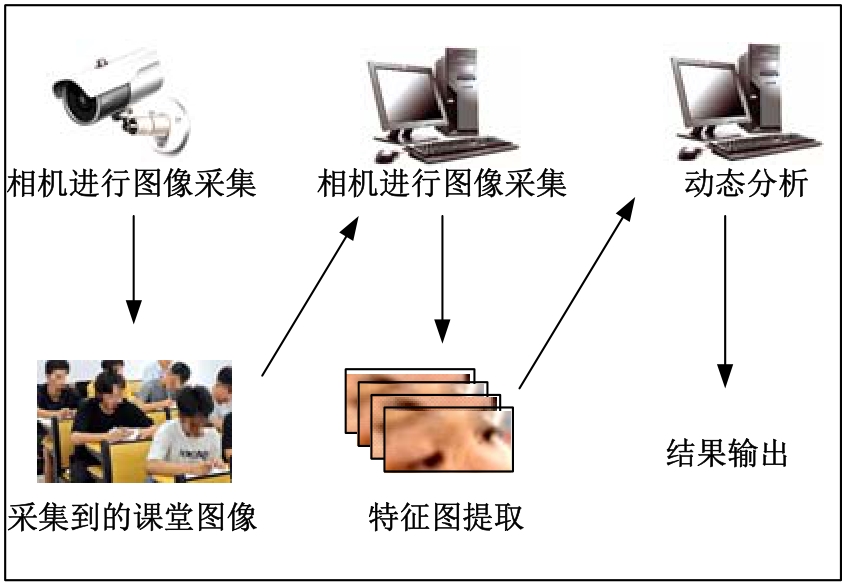
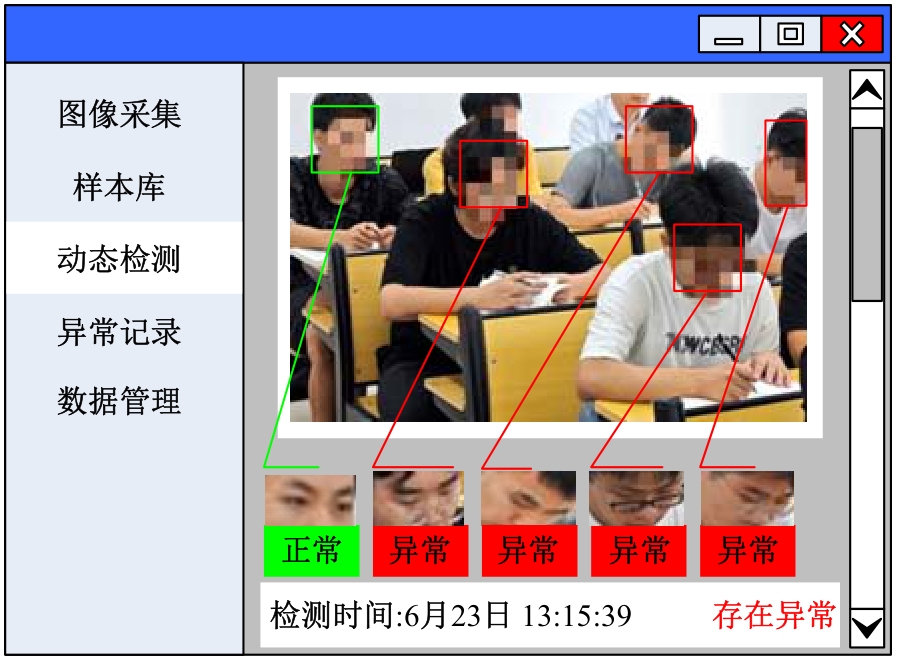
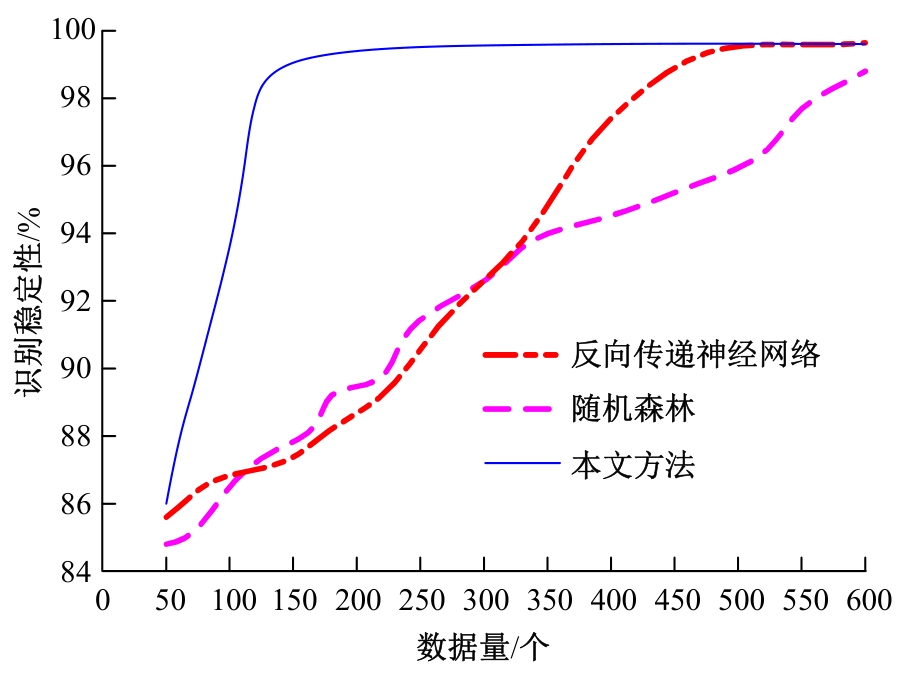
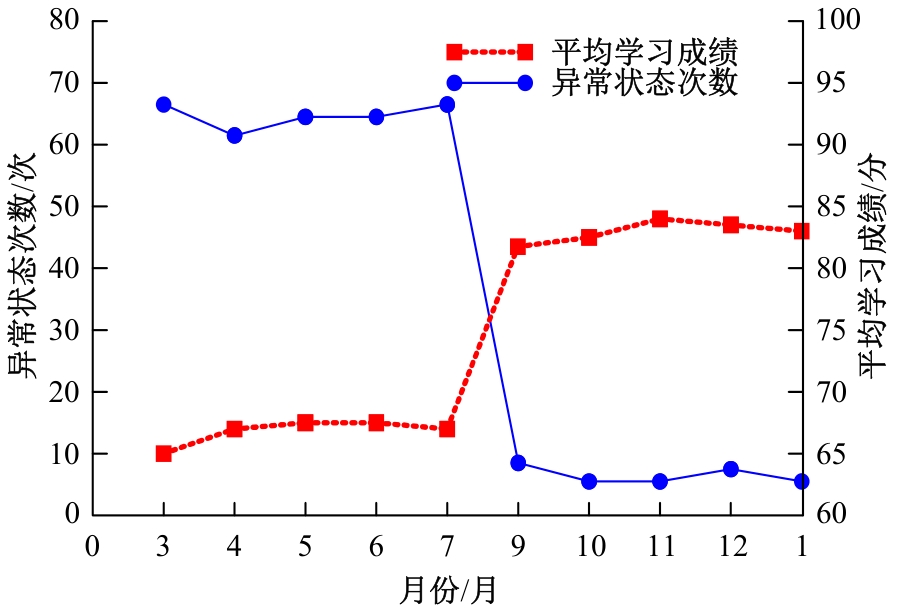
针对课堂上学生状态变化细微、关键特征难以捕捉的问题,提出了一种基于混合智能的学习状态实时采集与动态分析方法,及时发现异常学习状态。通过图像增强技术预处理采集图像,将增强图像输入卷积神经网络,经过卷积处理后,提取深层次特征图、关键特征图,并进一步将其输入长短期记忆网络中,实现对课堂学生学习状态的动态分析与识别。通过实验验证,该方法可实时反馈学生学习状态,识别效果良好且稳定性较高,借助该方法后,依据相关教务人员的纠正,学生学习成绩得到有效提升,具有一定的应用价值。
中图分类号:
- TP301

| [1] | 姜雨辰, 何赫, 刘涛, 等. 基于人工智能的图书馆学生学习状态监测技术研究[J]. 电子器件, 2023, 46(4): 1070-1074. |
| Jiang Yu-chen, He He, Liu Tao, et al. Research on student learning state monitoring technology for library based on artificial intelligence[J]. Electronic Devices, 2023, 46(4): 1070-1074. | |
| [2] | 林铭炜, 许江松, 林佳胤, 等.面向在线教育的学习者情感识别综述[J]. 控制与决策, 2024, 39(4): 1057-1074. |
| Lin Ming-wei, Xu Jiang-song, Lin Jia-yin, et al. A review of emotion recognition of learners for online education[J]. Control and Decision, 2024, 39(4): 1057-1074. | |
| [3] | 王涛春, 邱庆, 王成田, 等. LD-identify:基于无源RFID的网络学习状态识别[J]. 控制与决策, 2024, 39(1): 219-226. |
| Wang Tao-chun, Qiu Qing, Wang Cheng-tian, et al. LD-identify:network learning state recognition based on passive RFID[J]. Control and Decision,2024, 39(1): 219-226. | |
| [4] | 苏悦, 杨春金, 王建霞. 基于表情识别技术的学生课堂状态检测[J]. 河北工业科技, 2022, 39(5): 396-403. |
| Su Yue, Yang Chun-jin, Wang Jian-xia. Detection of students' classroom states based on expression recognition technology[J]. Hebei Industry Science and Technology,2022,39(5):396-403. | |
| [5] | Chen Z, Liang M, Xue Z,et al.STRAN: student expression recognition based on spatio-temporal residual attention network in classroom teaching videos[J].Applied Intelligence: The International Journal of Artificial Intelligence, Neural Networks, and Complex Problem-Solving Technologies,2023,53(21):25310-25329. |
| [6] | 刘劲, 罗晓曙, 徐照兴. 权重推断与标签平滑的轻量级人脸表情识别[J]. 计算机工程与应用, 2024, 60(2): 254-263. |
| Liu Jin, Luo Xiao-shu, Xu Zhao-xing. Weight inference and label smoothing for lightweight facial expression recognition[J]. Computer Engineering and Applications, 2024, 60(2): 254-263. | |
| [7] | 顾文娟, 丁灿, 魏金, 等.基于双边滤波MSR与AutoMSRCR融合的低光照图像增强[J]. 光学精密工程, 2023, 31(24): 3606-3617. |
| Gu Wen-juan, Ding Can, Wei Jin, et al. Low-light image enhancement based on the fusion of bilateral filter MSR and AutoMSRCR[J]. Optics and Precision Engineering, 2023, 31(24): 3606-3617. | |
| [8] | 李国民, 邵姮, 朱代先, 等. 改进同态滤波与多尺度融合的腐蚀图像增强[J]. 电子测量技术, 2023, 46(13): 118-123. |
| Li Guo-min, Shao Heng, Zhu Dai-xian, et al. Improved homomorphic filtering and multiscale fusion for corroded image enhancement[J]. Electronic Measurement Technology, 2023, 46(13): 118-123. | |
| [9] | 刘波, 田广粮, 肖斌, 等. 利用自适应光照初始化的弱光图像增强方法[J]. 电子与信息学报, 2024, 46(2): 643-651. |
| Liu Bo, Tian Guang-liang, Xiao Bin, et al. Low light image enhancement with adaptive light initialization[J]. Journal of Electronics & Information Technology, 2024, 46(2): 643-651. | |
| [10] | 杜芳芳, 王福忠, 高继梅. 空洞卷积网络下微表情实时识别方法仿真[J]. 计算机仿真, 2023, 40(7):172-175, 461. |
| Du Fang-fang, Wang Fu-zhong, Gao Ji-mei. Simulation of real-time recognition method of microexpression under empty convolution network[J]. Computer Simulation, 2023, 40(7): 172-175, 461. | |
| [11] | 云涛, 潘泉, 郝宇航, 等. 基于HRRP时频特征和多尺度非对称卷积神经网络的目标识别算法[J]. 西北工业大学学报, 2023, 41(3): 537-545. |
| Yun Tao, Pan Quan, Hao Yu-hang, et al. Target recognition algorithm based on HRRP time-spectrogram feature and multi-scale asymmetric convolutional neural network[J]. Journal of Northwestern Polytechnical University, 2023, 41(3): 537-545. | |
| [12] | 任艳丽, 余凌赞, 何港, 等. 一种隐私保护的卷积神经网络预测方案[J]. 计算机学报, 2023, 46(8): 1606-1619. |
| Ren Yan-li, Yu Ling-zan, He Gang, et al. A scheme of privacy-preserving convolutional neural network prediction[J]. Chinese Journal of Computers,2023, 46(8): 1606-1619. | |
| [13] | 冒鑫鑫, 吴胜昔, 咸博龙, 等.基于骨架的自适应图卷积和LSTM行为识别[J]. 华东理工大学学报: 自然科学版, 2022, 48(6): 816-825. |
| Mao Xin-xin, Wu Sheng-xi, Xian Bo-long, et al. Adaptive graph convolution and LSTM action recognition based on skeleton[J]. Journal of East China University of Science and Technology(Natural Science Edition), 2022, 48(6): 816-825. | |
| [14] | 柳长源, 李文强, 毕晓君. 基于RCNN-LSTM的脑电情感识别研究[J]. 自动化学报, 2022, 48(3): 917-925. |
| Liu Chang-yuan, Li Wen-qiang, Bi Xiao-jun. Research on EEG emotion recognition based on RCNN-LSTM[J]. Acta Automatica Sinica, 2022, 48(3):917-925. | |
| [15] | 余金锁, 卢先领. 基于分割注意力的特征融合CNN-Bi-LSTM人体行为识别算法[J]. 电子测量与仪器学报, 2022, 36(2): 89-95. |
| Yu Jin-shuo, Lu Xian-ling. Human action recognition algorithm of feature fusion CNN-Bi-LSTM based on split-attention[J]. Journal of Electronic Measurement and Instrumentation, 2022, 36(2): 89-95. |
| [1] | 杜睿山,王紫珊. 基于时空注意力的多视角人脸表情识别算法[J]. 吉林大学学报(工学版), 2025, 55(6): 2097-2102. |
| [2] | 冯志刚,王首起,于明月. 基于变分模态提取及轻量级网络的滚动轴承故障诊断[J]. 吉林大学学报(工学版), 2025, 55(6): 1883-1891. |
| [3] | 冶鑫晨,张海龙,王杰,李大磊,张萌,张亚州,杜旭,李嘉,王万琼. 基于EMD-LSTM的分子谱线数据预处理容器负载分组预测算法[J]. 吉林大学学报(工学版), 2025, 55(4): 1374-1383. |
| [4] | 丁海兰,祁坤钰. 基于TextRank算法和相似度的中文文本主题句自动提取[J]. 吉林大学学报(工学版), 2025, 55(3): 1001-1008. |
| [5] | 汪豪,赵彬,刘国华. 基于时间和运动增强的视频动作识别[J]. 吉林大学学报(工学版), 2025, 55(1): 339-346. |
| [6] | 胡宏宇,张争光,曲优,蔡沐雨,高菲,高镇海. 基于双分支和可变形卷积网络的驾驶员行为识别方法[J]. 吉林大学学报(工学版), 2025, 55(1): 93-104. |
| [7] | 张锦洲,姬世青,谭创. 融合卷积神经网络和双边滤波的相贯线焊缝提取算法[J]. 吉林大学学报(工学版), 2024, 54(8): 2313-2318. |
| [8] | 赵宏伟,武鸿,马克,李海. 基于知识蒸馏的图像分类框架[J]. 吉林大学学报(工学版), 2024, 54(8): 2307-2312. |
| [9] | 朱圣杰,王宣,徐芳,彭佳琦,王远超. 机载广域遥感图像的尺度归一化目标检测方法[J]. 吉林大学学报(工学版), 2024, 54(8): 2329-2337. |
| [10] | 特木尔朝鲁朝鲁,张亚萍. 基于卷积神经网络的无线传感器网络链路异常检测算法[J]. 吉林大学学报(工学版), 2024, 54(8): 2295-2300. |
| [11] | 朱国庆,刘显成,田从祥. 基于长短期记忆网络的公共建筑短期能耗预测模型[J]. 吉林大学学报(工学版), 2024, 54(7): 2009-2014. |
| [12] | 魏晓辉,王晨洋,吴旗,郑新阳,于洪梅,岳恒山. 面向脉动阵列神经网络加速器的软错误近似容错设计[J]. 吉林大学学报(工学版), 2024, 54(6): 1746-1755. |
| [13] | 孙铭会,薛浩,金玉波,曲卫东,秦贵和. 联合时空注意力的视频显著性预测[J]. 吉林大学学报(工学版), 2024, 54(6): 1767-1776. |
| [14] | 夏超,王梦佳,朱剑月,杨志刚. 基于分层卷积自编码器的钝体湍流流场降阶分析[J]. 吉林大学学报(工学版), 2024, 54(4): 874-882. |
| [15] | 杨国俊,齐亚辉,石秀名. 基于数字图像技术的桥梁裂缝检测综述[J]. 吉林大学学报(工学版), 2024, 54(2): 313-332. |
|
||