吉林大学学报(工学版) ›› 2026, Vol. 56 ›› Issue (1): 239-246.doi: 10.13229/j.cnki.jdxbgxb.20240618
基于注意力机制的不平衡数据的非侵入式负荷分解
周求湛1( ),李新萌1,沈皓庆子2,武慧南1(),李媛媛1,荣静1,胡春华3,刘萍萍4
- 1.吉林大学 通信工程学院,长春 130012
2.国网浙江省电力有限公司 金华供电公司计量中心,浙江 金华 321000
3.烟台东方威思顿电气有限公司,山东 烟台 264003
4.吉林大学 计算机科学与技术学院,长春 130012
Non-intrusive load decomposition of unbalanced data based on attention mechanism
Qiu-zhan ZHOU1(),Xin-meng LI1,Hao-qing-zi SHEN2,Hui-nan WU1(),Yuan-yuan LI1,Jing RONG1,Chun-hua HU3,Ping-ping LIU4
- 1.College of Communication Engineering,Jilin University,Changchun 130012,China
2.Jinhua Power Supply Company Metering Center,State Grid Zhejiang Electric Power Company,Jinhua 321000,China
3.Yantai Dongfang Wisdom Electric Co. ,Ltd. ,Yantai 264003,China
4.College of Computer Science and Technology,Jilin University,Changchun 130012,China
摘要:
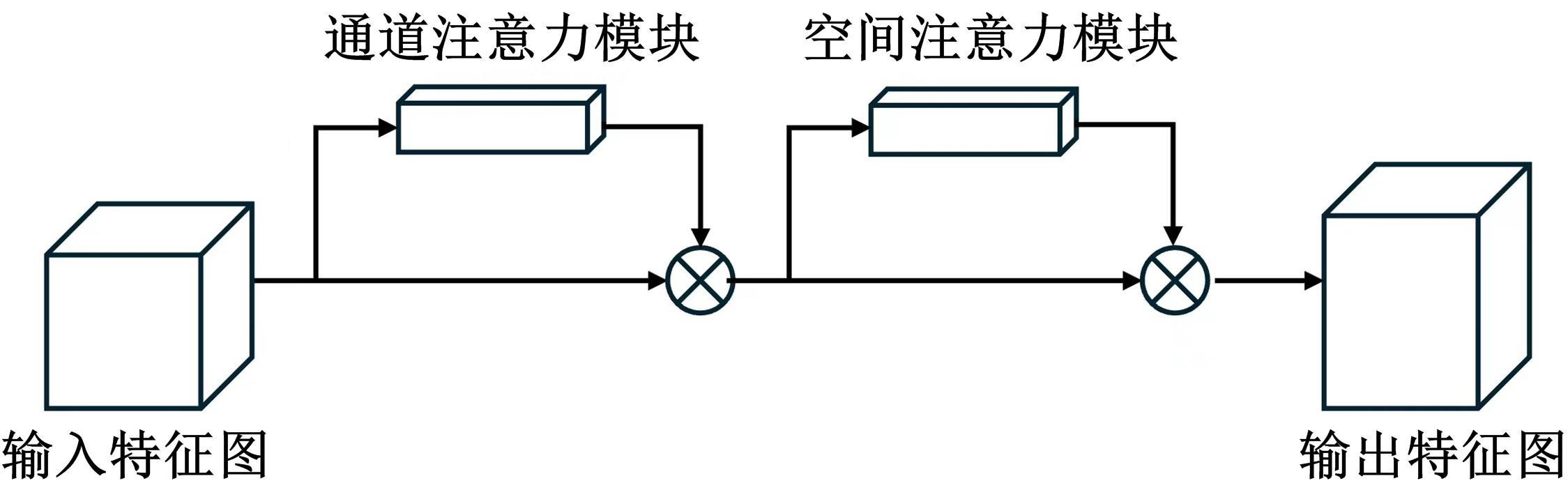
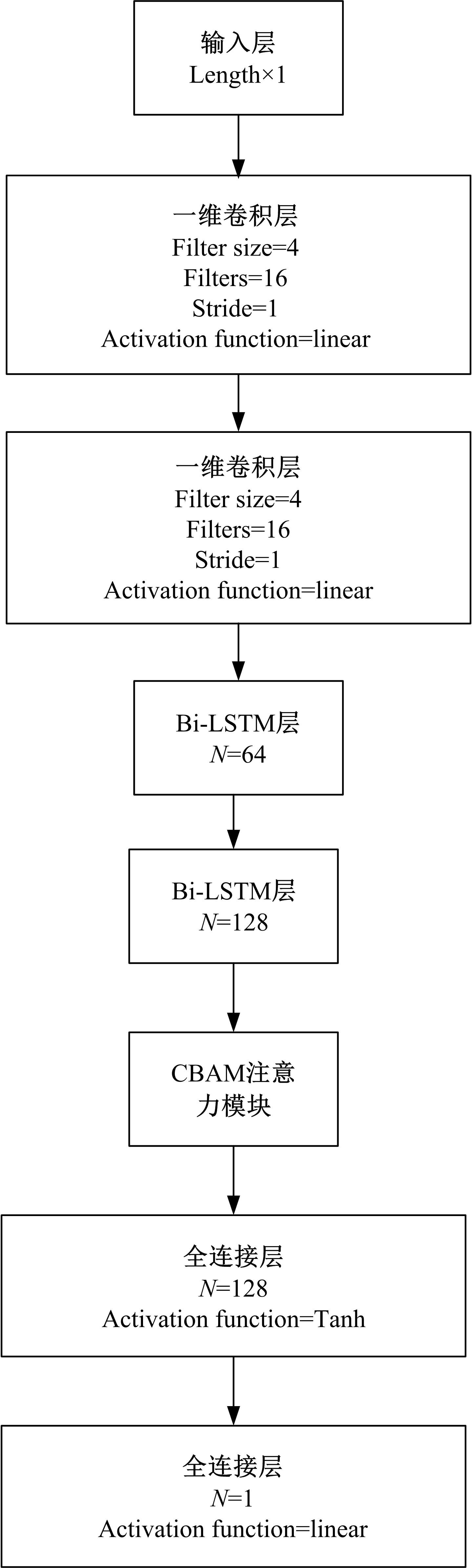
智能电表低频采样非侵入式负荷分解任务中存在负荷启停事件稀疏、样本类别分布失衡的问题,少数类及边界样本匮乏易导致模型在负荷开启与过渡阶段出现漏检、误判,而现有过采样方法在合成样本数量精确控制、近邻筛选及边界界定上存在不足,随机插值策略还容易引入重复或跨类混叠样本。为解决上述问题,本文提出了结合K-means聚类与Borderline-SMOTE的改进算法(KB-SMOTE):先提取少数类边界样本并聚类分簇,再以簇心引导簇内插值生成新样本,减少冗余并增强边界可分性。模型层面,针对传统时序网络对关键瞬态与局部特征捕捉不足的问题,设计了基于卷积块注意力模块改进混合注意力机制的Bi-LSTM负荷分解模型,通过通道与空间注意力协同实现特征自适应重加权,强化负荷运行相关关键信息。UK-DALE数据集仿真实验表明:相较于DAE、Seq2point及基础Bi-LSTM等基线模型,本文方法在多项评价指标上性能更优,验证了其在不平衡负荷数据场景的有效性。
中图分类号:
- TP274

| [1] | Hart G W. Nonintrusive appliance load monitoring[J]. Proceedings of the IEEE, 1992, 80(12):1870-1891. |
| [2] | Chawla N V, Bowyer K W, Hall L O, et al. SMOTE: synthetic minority over-sampling technique[J]. Journal of Artificial Intelligence Research, 2002, 16(1):321-357. |
| [3] | Han H, Wang W Y, Mao B H. Borderline-SMOTE: a new over-sampling method in imbalanced data sets learning[C]∥International Conference on Intelligent Computing, Hefei,China, 2005: 878-887. |
| [4] | Guo Y, Xiong X, Fu Q, et al. Research on non-intrusive load disaggregation method based on multi-model combination[J]. Electric Power Systems Research, 2021, 200: No.107472. |
| [5] | Gales M, Young S. The application of hidden Markov models in speech recognition[J]. Foundations and Trends in Signal Processing, 2008, 1(3): 195-304. |
| [6] | Upadhyay A, Sharma S K, Upadhyay S. Face identification and verification using hidden Markov model with maximum score approach[J]. Indian Journal of Science and Technology, 2017, 10(47): 671-677. |
| [7] | Kim H, Marwah M, Arlitt M, et al. Unsupervised disaggregation of low frequency power measurements[C]∥Proceedings of the SIAM International Conference on Data, Mining, Mesa,USA, 2011: 747-758. |
| [8] | Pattem S. Unsupervised disaggregation for non-intrusive load monitoring[C]∥The 11th International Conference on Machine Learning and Applications(ICMLA), Boca Raton,USA, 2012: 515-520. |
| [9] | Zoha A, Gluhak A, Nati M, et al. Low-power appliance monitoring using factorial hidden Markov models[C]∥IEEE 8th International Conference on Intelligent Sensors, Sensor Networks and Information Processing,Melbourne,Australia, 2013: 527-532. |
| [10] | Wang X N, Wang J H, Shi D, et al. A factorial hidden Markov model for energy disaggregation based on human behavior analysis[C]∥Proceedings of the IEEE Power & Energy Society General Meeting (PESGM), Portland, USA,2018: 1-5. |
| [11] | Kolter J Z, Jaakkola T. Approximate inference in additive factorial HMMs with application to energy disaggregation[C]∥Proceedings of the 5th International Conference on Artificial Intelligence and Statistics, La Palma,Spain, 2012: 1472-1482. |
| [12] | Kelly J, Knottenbelt W. Neural NILM: deep neural networks applied to energy disaggregation[C]∥Proceedings of the 2nd ACM International Conference on Embedded Systems for Energy-Efficient Built Enviroments, New York,USA, 2015: 55-64. |
| [13] | Zhang C, Zhong M, Wang Z, et al. Sequence-to-point learning with neural networks for non-intrusive load monitoring[C]∥The 32nd AAAI Conference on Artificial Intelligence, New Orleans, USA, 2018: 2604-2611. |
| [14] | Wu Q, Wang F. Concatenate convolutional neural networks for non-intrusive load monitoring across complex background[J]. Energies, 2019, 12(8): 1572-1576. |
| [15] | Gomes E, Pereira L. PB-NILM: pinball guided deep non-intrusive load monitoring[J]. IEEE Access, 2020, 8: 48386-48398. |
| [16] | De Aguiar E L, Da Silva Nolasco L, Lazzaretti A E, et al. St-nilm: a wavelet scattering-based architecture for feature extraction and multilabel classification in nilm signals[J]. IEEE Sensors Journal, 2024, 24(7): 10540-10550. |
| [17] | Woo S, Park J, Lee J Y, et al. CBAM: convolutional block attention module[C]∥Proceedings of the European Conference on Computer Vision (ECCV),Munich,Germany, 2018: 3-19. |
| [18] | Hu J, Shen L, Sun G,et al. Squeeze-and-excitation networks[C]∥IEEE/CVF Confernece on Computer Vision and Pattern Recognition,Salt Lake City, USA,2018:7132-7141. |
| [19] | Simonsen J, Jensen O S. Contact quality in participation: a "sensethic" perspective[C]∥Proceedings of the 14th Participatory Design Conference: Short Papers, Interactive Exhibitions, Workshops,Aarhus,Denmark, 2016: 45-48. |
| [20] | Kelly J, Knottenbelt W. The UK-DALE dataset, domestic appliance-level electricity demand and whole-house demand from five UK homes[J]. Scientific Data, 2015, 2(1): 1-14. |
| [21] | Nalmpantis C, Vrakas D. Machine learning approaches for non-intrusive load monitoring: from qualitative to quantitative comparation[J]. Artificial Intelligence Review, 2019, 52(1): 217-243. |
| [1] | 冯志刚,任梦媛,董冰,于明月. 基于多频带特征图和改进SqueezeNet的滚动轴承故障诊断[J]. 吉林大学学报(工学版), 2026, 56(1): 96-108. |
| [2] | 霍震,金立生,华强,贺阳. 基于边缘特征引导的智能汽车语义分割方法[J]. 吉林大学学报(工学版), 2025, 55(9): 3032-3041. |
| [3] | 庄珊娜,王君帅,白晶,杜京瑾,王正友. 基于三维卷积与自注意力机制的视频行人重识别[J]. 吉林大学学报(工学版), 2025, 55(7): 2409-2417. |
| [4] | 冯志刚,王首起,于明月. 基于变分模态提取及轻量级网络的滚动轴承故障诊断[J]. 吉林大学学报(工学版), 2025, 55(6): 1883-1891. |
| [5] | 薛雅丽,俞潼安,崔闪,周李尊. 基于级联嵌套U-Net的红外小目标检测[J]. 吉林大学学报(工学版), 2025, 55(5): 1714-1721. |
| [6] | 才华,王玉瑶,付强,马智勇,王伟刚,张晨洁. 基于注意力机制和特征融合的语义分割网络[J]. 吉林大学学报(工学版), 2025, 55(4): 1384-1395. |
| [7] | 张河山,范梦伟,谭鑫,郑展骥,寇立明,徐进. 基于改进YOLOX的无人机航拍图像密集小目标车辆检测[J]. 吉林大学学报(工学版), 2025, 55(4): 1307-1318. |
| [8] | 张兰芳,李根泽,刘婷宇,余博. 局部多车影响下跟驰行为机理及建模[J]. 吉林大学学报(工学版), 2025, 55(3): 963-973. |
| [9] | 李扬,李现国,苗长云,徐晟. 基于双分支通道先验和Retinex的低照度图像增强算法[J]. 吉林大学学报(工学版), 2025, 55(3): 1028-1036. |
| [10] | 王祥,谭国真,彭衍飞,任浩,李健平. 基于语言推理和认知记忆的自动驾驶决策模型[J]. 吉林大学学报(工学版), 2025, 55(12): 3918-3927. |
| [11] | 李云红,王梅,苏雪平,李丽敏,张富星,郝特吉. 结合注意力与上下文融合的遥感图像道路提取[J]. 吉林大学学报(工学版), 2025, 55(12): 4034-4044. |
| [12] | 彭铎,刘明硕,谢堃. 观测站参数误差下联合多特征融合注意力机制的TDOA/FDOA多机无源定位算法[J]. 吉林大学学报(工学版), 2025, 55(11): 3751-3761. |
| [13] | 周求湛,牟岩,武慧南,陈霄,汪锋,李琛,张雯,刘萍萍,王聪. 基于RBVS和CBCNN的风机叶片故障检测和分类方法[J]. 吉林大学学报(工学版), 2025, 55(10): 3119-3130. |
| [14] | 郭晓然,王铁君,闫悦. 基于局部注意力和本地远程监督的实体关系抽取方法[J]. 吉林大学学报(工学版), 2025, 55(1): 307-315. |
| [15] | 刘元宁,臧子楠,张浩,刘震. 基于深度学习的核糖核酸二级结构预测方法[J]. 吉林大学学报(工学版), 2025, 55(1): 297-306. |
|
||