吉林大学学报(工学版) ›› 2025, Vol. 55 ›› Issue (12): 3783-3792.doi: 10.13229/j.cnki.jdxbgxb.20240382
• 车辆工程·机械工程 •
放电参数对NH3/空气混合气纳秒脉冲多通道点火特性的影响
熊勇1( ),田杰1,程勇1(),赵庆武2
- 1.山东大学 能源与动力工程学院,济南 250061
2.萨里大学 机械工程科学学院,英国 吉尔福德 GU27XH
Effect of discharge parameters on nanosecond pulse multi⁃channel ignition characteristics of NH3/air mixture
Yong XIONG1(),Jie TIAN1,Yong CHENG1(),Qing-wu ZHAO2
- 1.School of Energy and Power Engineering,Shandong University,Jinan 250061,China
2.School of Mechanical Engineering Sciences,University of Surrey,Guildford GU27XH,UK
摘要:
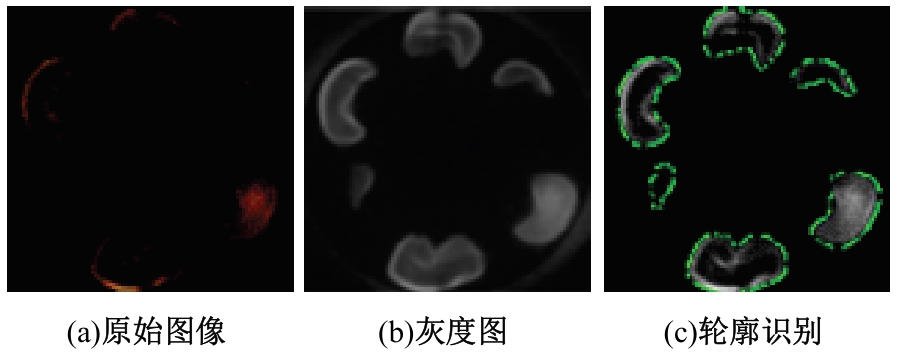
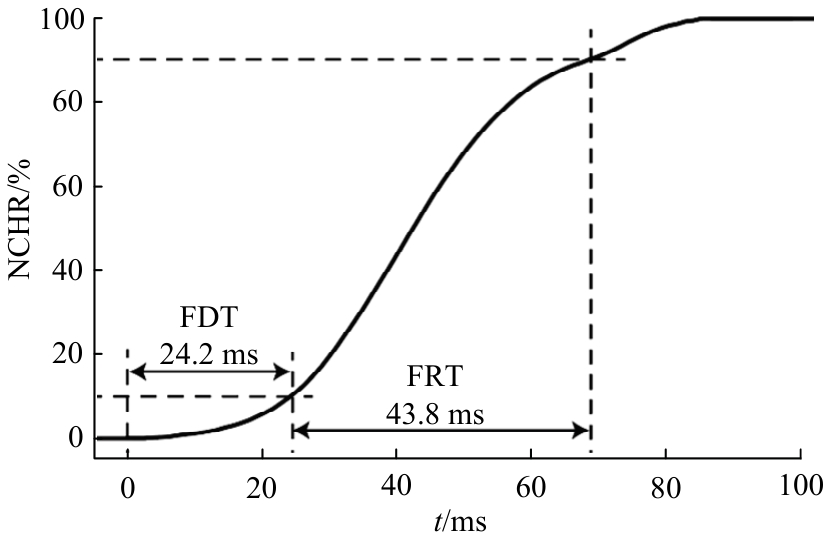
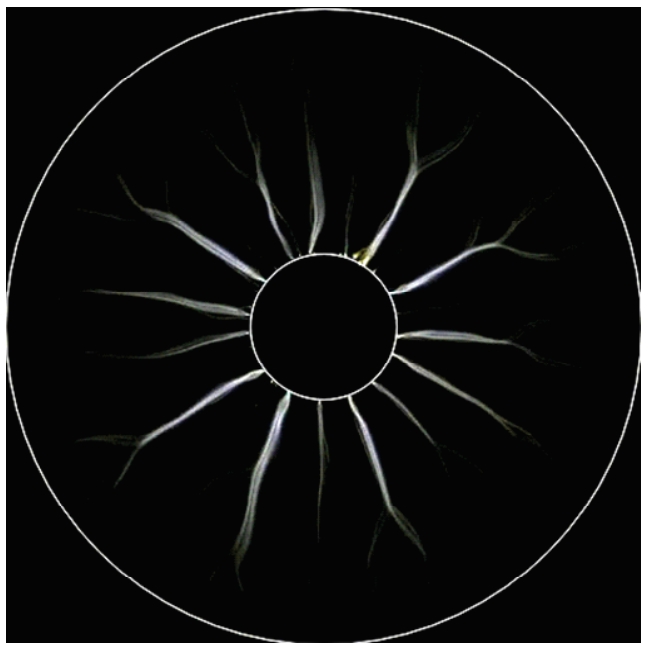
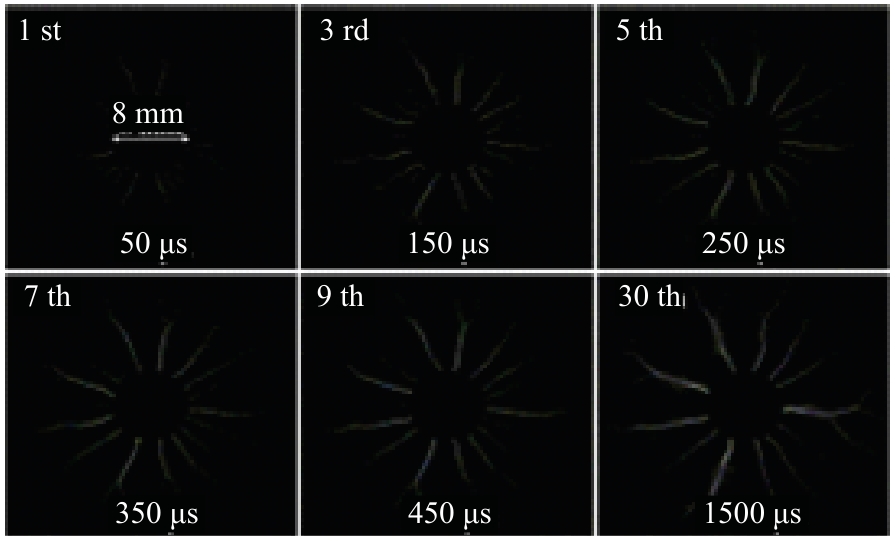
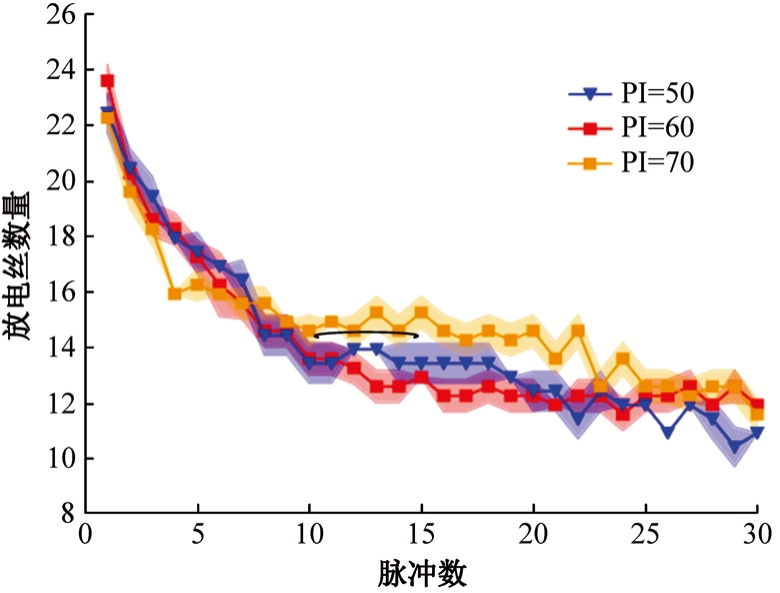
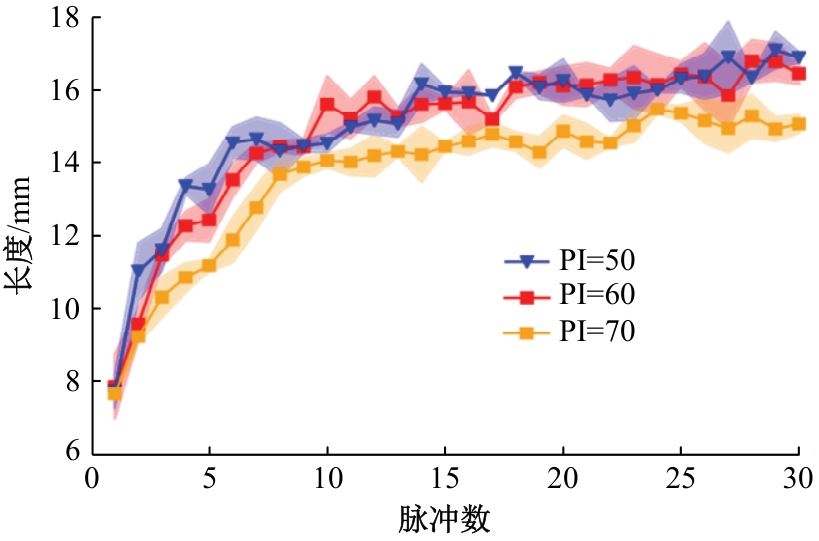
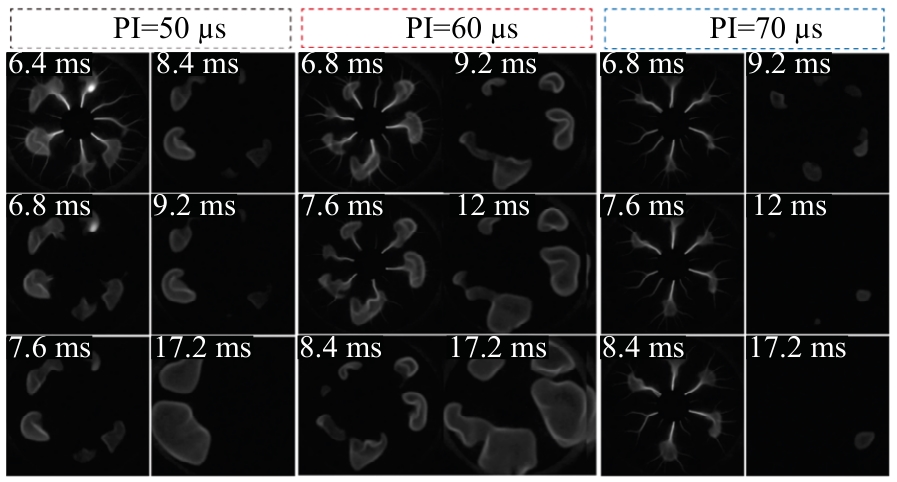
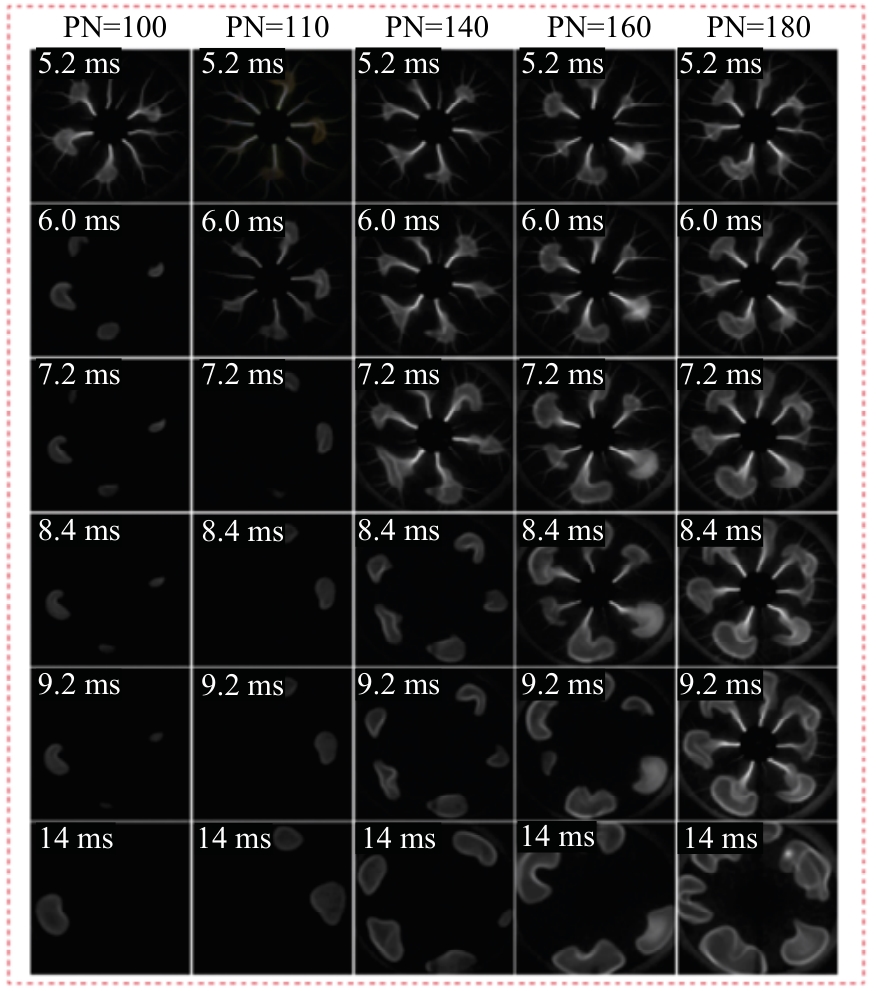
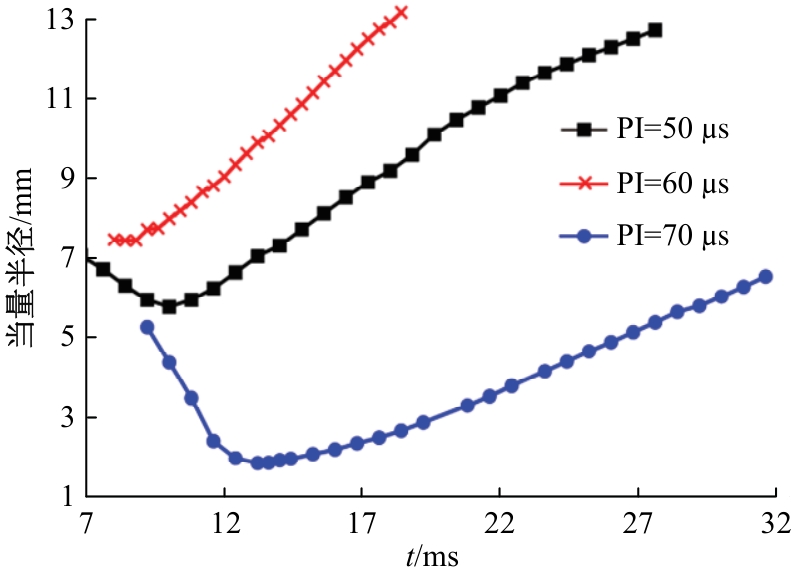
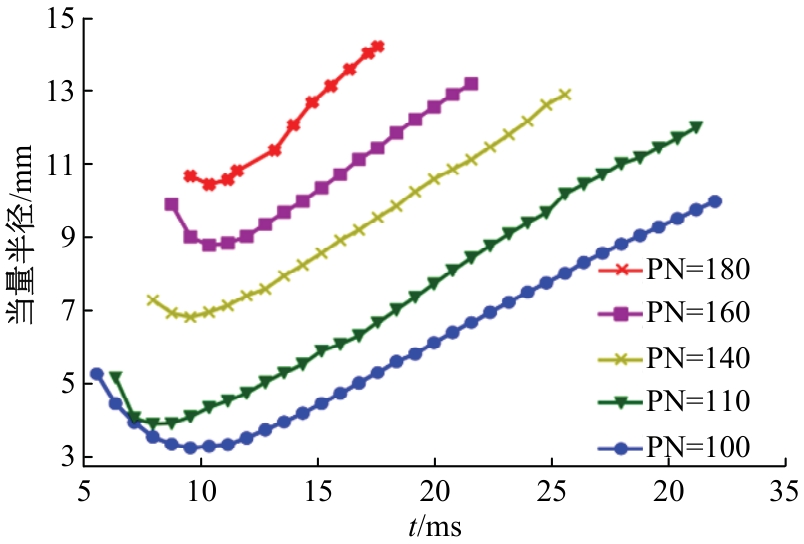
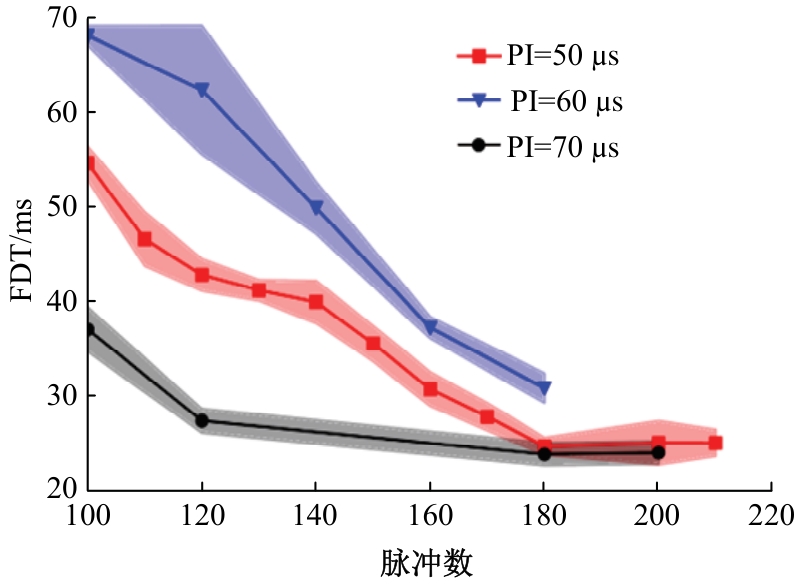
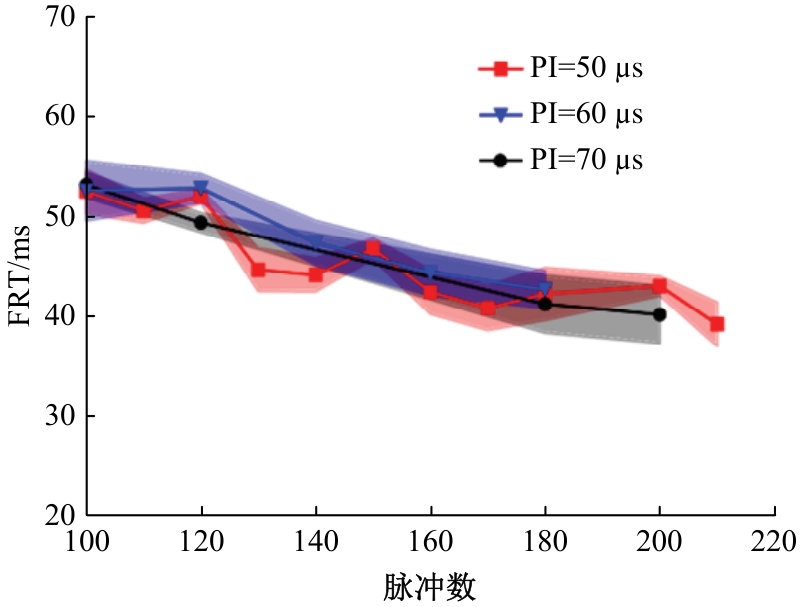
基于定容燃烧弹,研究了NH3/空气混合气中放电脉冲间隔和放电脉冲数对纳秒脉冲沿面介质阻挡放电(nSDBD)的放电特性和点火特性的影响规律。放电特性测试表明:nSDBD可以产生多个独立分布的放电丝,扩大了等离子体的范围;放电脉冲间隔为50 μs时,30个放电脉冲能激发约12个放电丝,其长度约14 mm。点火特性测试表明:nSDBD实现了空间多点点火效果;脉冲间隔为50 μs时,180个放电脉冲产生了6个环绕顶部电极的初始火核;NH3/空气混合气中,初始火核出现了消散的现象,使初始火核数量与稳定燃烧的火核数量不一致;随着脉冲间隔或脉冲数的增加,初始火核面积增大,并且稳定火核的数量从1个逐渐增加至6个,这有效缩短了NH3/空气混合气的着火延迟,缩短量可达30 ms,约55%;脉冲间隔和脉冲数的调整可以有效控制NH3/空气混合气的燃烧相位。
中图分类号:
- TK411

| [1] | 中国内燃机工业协会. 内燃机产业高质量发展规划(2021—2035)(缩略版)[N].中国工业报, 2021-12-14(006). |
| [2] | 帅石金, 王志, 马骁, 等. 碳中和背景下内燃机低碳和零碳技术路径及关键技术[J].汽车安全与节能学报, 2021, 12(4): 417-439. |
| Shi-jin Shuai, Wang Zhi, Ma Xiao, et al. Low carbon and zero carbon technology paths and key technologies of ICEs under the background of carbon neutrality[J]. Journal of Automotive Safety and Energy, 2021, 12(4): 417-439. | |
| [3] | Kojima Y. High purity hydrogen generation from ammonia[J]. Abstracts of Papers of the American Chemical Society, 2017, 254: No.163. |
| [4] | Valera-Medina A, Xiao H, Owen-Jones M, et al. Ammonia for power[J]. Progress in Energy and Combustion Science, 2018, 69: 63-102. |
| [5] | Valera-Medina A, Marsh R, Runyon J, et al. Ammonia-methane combustion in tangential swirl burners for gas turbine power generation[J]. Applied Energy, 2017, 185: 1362-1371. |
| [6] | 周上坤, 杨文俊, 谭厚章, 等. 氨燃烧研究进展[J]. 中国电机工程学报, 2021, 41(12): 4164-4182. |
| Zhou Shang-kun, Yang Wen-jun, Tan Hou-zhang, et al. Research progress of ammonia combustion[J]. Proceedings of the CSEE, 2021, 41(12): 4164-4182. | |
| [7] | Chen Z, Ju Y. Theoretical analysis of the evolution from ignition kernel to flame ball and planar flame[J]. Combustion Theory and Modelling, 2007, 11(3):427-453. |
| [8] | Chen Z, Burke M P, Ju Y. Effects of Lewis number and ignition energy on the determination of laminar flame speed using propagating spherical flames[J]. Proceedings of the Combustion Institute, 2009, 32(1):1253-1260. |
| [9] | Chen Z, Burke M P, Ju Y. On the critical flame radius and minimum ignition energy for spherical flame initiation[J]. Proceedings of the Combustion Institute, 2011, 33(1): 1218-1226. |
| [10] | Zheng M, Chen G Y, Tong J, et al. Spark-based advanced ignition control for future diluted gasoline engines[C]∥Ignition Systems for Gasoline Engines: 4th International Conference, Berlin, Germany, 2018: 1-25. |
| [11] | Lu H, Li L, Liu Y, et al. An ultra-high power ignition system for EGR-diluted GDI engine[C]∥Proceedings of SAE-China Congress,Shanghai,China, 2017:197-206. |
| [12] | Wildfire P E, Nawrocki A J, Pertl F A, et al. Investigation of cold start capability of a Briggs and Stratton engine using jet a fuel and microwave plasma ignition[C]∥SAE Technical Paper, 2009-1057. |
| [13] | Wang Z, Huang J, Wang Q, et al. Experimental study of microwave resonance plasma ignition of methane-air mixture in a constant volume cylinder[J]. Combustion and flame, 2015, 162(6):2561-2568. |
| [14] | Hwang J, Bae C, Park J, et al. Microwave-assisted plasma ignition in a constant volume combustion chamber[J]. Combustion and Flame, 2016, 167: 86-96. |
| [15] | Toedter O, Heinz A, Disch C, et al. Comparing visualization of inflammation at transient load steps comparing ignition systems[C]∥Ignition Systems for Gasoline Engines,Berlin,Germany, 2017:190-203. |
| [16] | Qiu J, Zhang C, Liu Z, et al. Propagation of ionization waves in nanosecond-pulse dielectric barrier discharge in atmospheric air[J]. IEEE Trans Plasma Sci, 2018, 46(6): 1943-1950. |
| [17] | Stepanyan S A, Starikovskiy A Y, Popov N A, et al. A nanosecond surface dielectric barrier discharge in air at high pressures and different polarities of applied pulses: transition to filamentary mode[J]. Plasma Sources Sci Technol, 2014, 23(4):No.045003. |
| [18] | Anokhin E M, Kuzmenko D N, Kindysheva S V, et al. Ignition of hydrocarbon: air mixtures by a nanosecond sur-face dielectric barrier discharge[J]. Plasma Sources Science and Technology, 2015, 24(4):No.045014. |
| [19] | Boumehdi M A, Stepanyan S A, Desgroux P, et al. Ignition of methane-and n-butane-containing mixtures at high pressures by pulsed nanosecond discharge[J]. Combustion and Flame, 2015, 162(4):1336-1349. |
| [20] | Zhao Q, Xiong Y, Yang X, et al. Experimental study on multi-channel ignition of propane-air by transient repetitive nanosecond surface dielectric barrier discharge[J]. Fuel, 2022, 324:No.124723. |
| [21] | 赵庆武, 程勇, 杨雪, 等. 高重频纳秒脉冲放电点火系统设[J].吉林大学学报: 工学版, 2021, 51(2): 414-421. |
| Zhao Qing-wu, Cheng Yong, Yang Xue, et al. A high⁃frequency nanosecond⁃pulsed ignition system for plasma assisted ignition and combustion[J]. Journal of Jilin University (Engineering and Technology Edition), 2021, 51(2): 414-421. | |
| [22] | Lin B, Wu Y, Zhang Z, et al. Multi-channel nanosecond discharge plasma ignition of premixed propane/air un-der normal and sub-atmospheric pressures[J]. Combustion and Flame, 2017, 182:102-113. |
| [23] | Starikovskaia S M. Plasma-assisted ignition and combustion: nanosecond discharges and development of kinetic mechanisms[J]. Journal of Physics D: Applied Physics, 2014, 47(35):No.353001. |
| [24] | He K, Pang L, Wang X, et al. A novel method of calculating the energy deposition curve of nanosecond pulsed surface dielectric barrier discharge[J]. Plasma Sources Science & Technology, 2015, 24(2):No.025034. |
| [25] | 陆海峰,汪阳,梁敬,等. 新型两阶段点火系统对稀燃效率的影响[J]. 内燃机学报,2017,35(6): 530-537. |
| Lu Hai-feng, Wang Yang, Liang Jing, et al. Effect of innovative two-stage ignition system on lean burn efficiency[J]. Transactions of CSICE,2017,35(6):530-537. |
| [1] | 王建,马文虎,谢太林,郭华,尹必峰. 重型拖拉机新型双离合全动力换挡变速箱液压系统设计与试验[J]. 吉林大学学报(工学版), 2025, 55(5): 1806-1816. |
| [2] | 商蕾,杨萍,杨祥国,潘建欣,杨军,张梦如. 基于APSO-BP-PID控制的质子交换膜燃料电池热管理系统温度控制[J]. 吉林大学学报(工学版), 2024, 54(9): 2401-2413. |
| [3] | 张帆,韩宁,杜青,部竞琦,彭志军. MMH凝胶液滴蒸发与燃烧过程的数值仿真[J]. 吉林大学学报(工学版), 2024, 54(11): 3114-3124. |
| [4] | 陈贵升,罗国焱,李靓雪,黄震,李一. 柴油机颗粒捕集器孔道流场及其高原环境下噪声特性分析[J]. 吉林大学学报(工学版), 2023, 53(7): 1892-1901. |
| [5] | 王建,于威,王斌. 高原状态下甲醇替代率对柴油机燃烧与排放的影响[J]. 吉林大学学报(工学版), 2023, 53(4): 954-963. |
| [6] | 金兆辉,谷乐祺,洪伟,解方喜,尤田. 液压可变气门系统压力波动的影响分析[J]. 吉林大学学报(工学版), 2022, 52(4): 773-780. |
| [7] | 张岩,刘玮,张树勇,裴毅强,董蒙蒙,秦静. 二/四冲程可变柴油机燃烧室热负荷的改善[J]. 吉林大学学报(工学版), 2022, 52(3): 504-514. |
| [8] | 赵文伯,李玉洁,邓俊,李理光,吴志军. 针阀运动规律及其对喷嘴内流和喷雾特性影响[J]. 吉林大学学报(工学版), 2022, 52(10): 2234-2243. |
| [9] | 李志军,刘浩,张立鹏,李振国,邵元凯,李智洋. 过滤壁结构对颗粒捕集器深床过滤影响的模拟[J]. 吉林大学学报(工学版), 2021, 51(2): 422-434. |
| [10] | 赵庆武,程勇,杨雪,王宁. 高重频纳秒脉冲放电点火系统设计[J]. 吉林大学学报(工学版), 2021, 51(2): 414-421. |
| [11] | 王忠,李游,张美娟,刘帅,李瑞娜,赵怀北. 柴油机排气阶段颗粒碰撞过程动力学特征分析[J]. 吉林大学学报(工学版), 2021, 51(1): 39-48. |
| [12] | 胡云峰,丁一桐,赵志欣,蒋冰晶,高金武. 柴油发动机燃烧过程数据驱动建模与滚动优化控制[J]. 吉林大学学报(工学版), 2021, 51(1): 49-62. |
| [13] | 王建,许鑫,顾晗,张多军,刘胜吉. 基于排气热管理的柴油机氧化催化器升温特性[J]. 吉林大学学报(工学版), 2020, 50(2): 408-416. |
| [14] | 刘长铖,刘忠长,田径,许允,杨泽宇. 重型增压柴油机燃烧过程中的缸内㶲损失[J]. 吉林大学学报(工学版), 2019, 49(6): 1911-1919. |
| [15] | 宋昌庆,陈文淼,李君,曲大为,崔昊. 不同当量比下单双点火对天然气燃烧特性的影响[J]. 吉林大学学报(工学版), 2019, 49(6): 1929-1935. |
|
||